
Technical Notes/Wire Process2026-10-18
How 0.05 mm Fine Wire Is Drawn: Drawing, Annealing and Break Control
From an 8 mm rod to 0.05 mm wire is a 160× reduction. Success is decided not by the last die but by consistency of intermediate annealing, lubrication and tension.
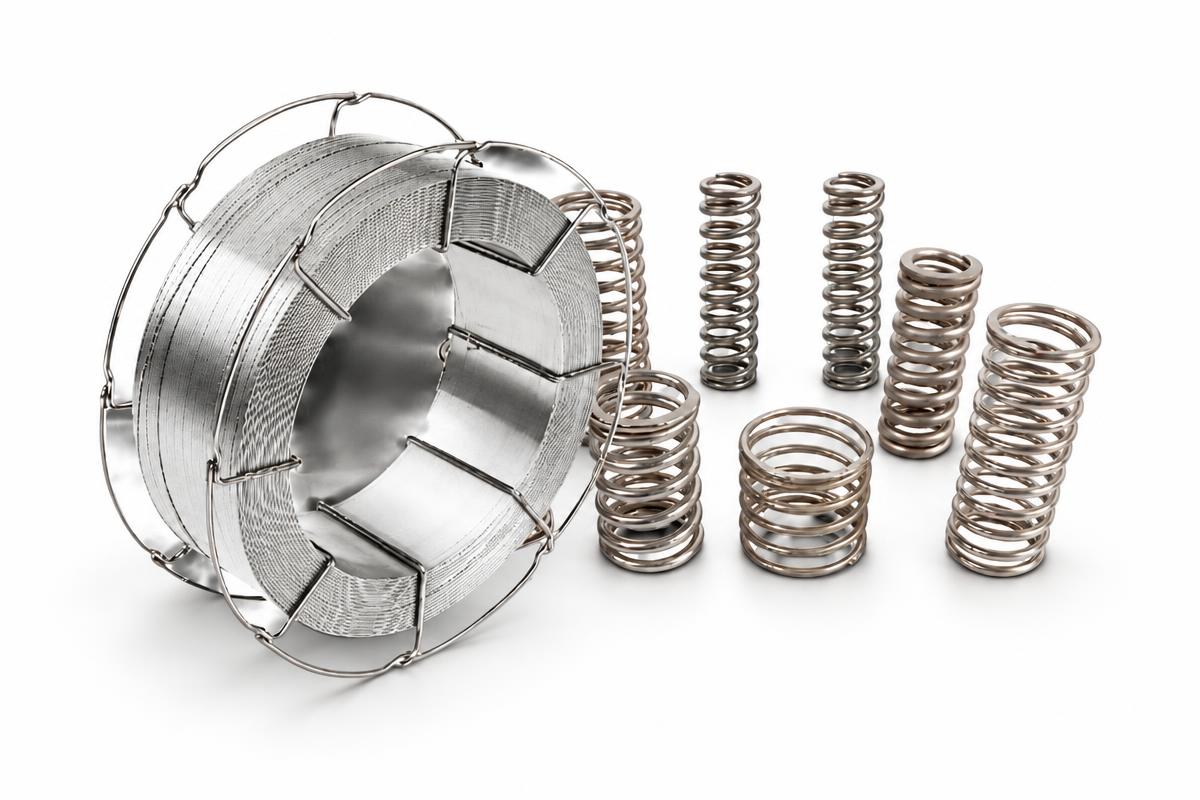
Fine wire is one of the most stability-demanding alloy products. The smaller the diameter, the bigger the relative effect of surface defects and inclusions — one micro-crack on a 0.05 mm wire breaks the whole batch during coiling or weaving.
Route: multi-draw + intermediate anneal + wet drawing
The standard route is multi-draw to about 1.0 mm, then wet drawing down to 0.05 mm. Each pass has a controlled reduction; accumulated work hardening forces intermediate anneals, or the wire embrittles and snaps in the die.
Lubrication and dies
In the fine stage, lubricant film uniformity directly sets surface quality; die profile, polish and concentricity set diameter tolerance. Many "cannot draw" problems trace back to soap concentration or die wear.
Three common break causes
First, inclusions or coarse particles from the feedstock. Second, insufficient annealing accumulating work hardening. Third, take-up tension fluctuation causing local necking. Diagnose from feedstock and annealing curves before touching drawing speed.
What to specify on delivery
Diameter tolerance, tensile strength and elongation, surface condition (scratches, bambooing), and per-heat property data. Wire destined for springs or weaving should also confirm coil diameter and residual twist to avoid knotting during forming.
This article is a general technical note on materials and processing; cited standards are public standard numbers. Specific grades, sizes and acceptance items are subject to the technical agreement confirmed by both parties.