
Technical Notes/Grade Notes2026-11-12
Why GH4169 / Inconel 718 Is the Most Used Superalloy
A grade from the 1960s still holds the largest share of wrought nickel superalloy consumption. 718 wins not by being the strongest, but by balancing strength, processability and cost.
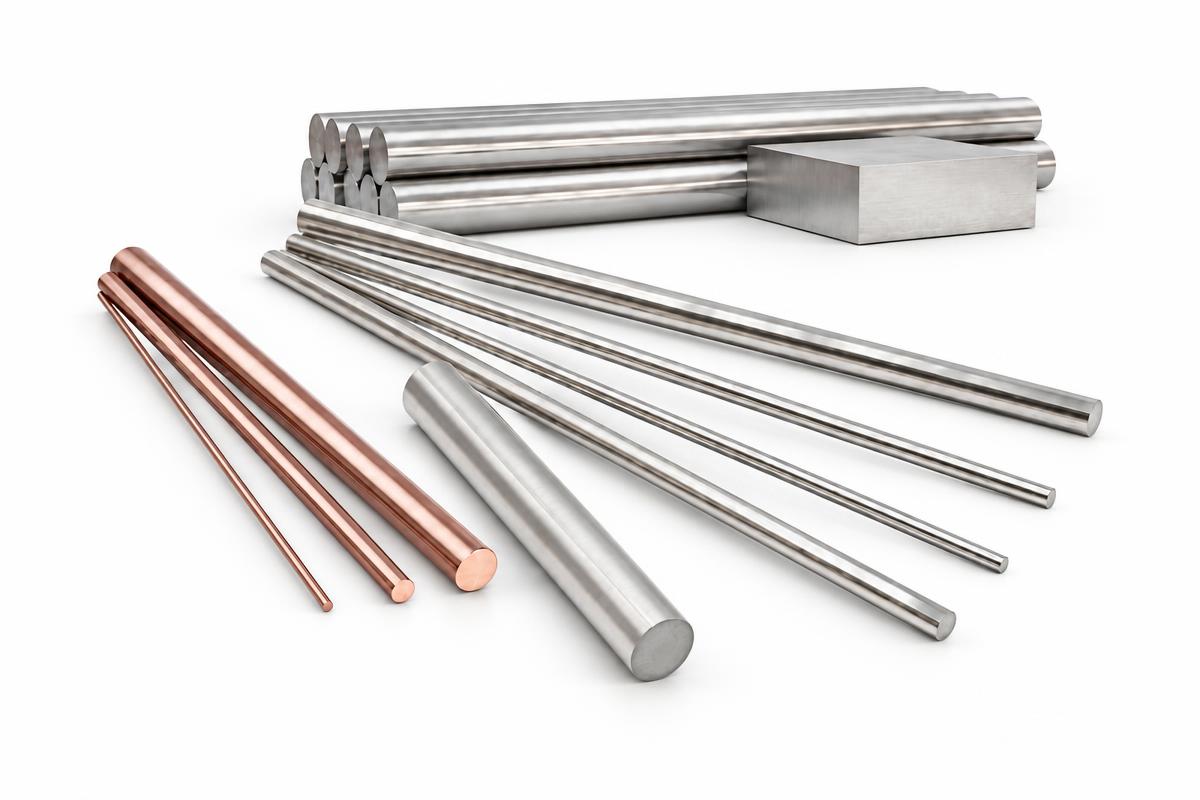
If you could only remember one superalloy, most engineers would pick GH4169 (Inconel 718, UNS N07718). It has held the largest share of wrought nickel superalloy consumption for decades, from aircraft discs to oilfield wellhead equipment.
Strength: γ″ up to 650 °C
718 is strengthened by the γ″ (Ni3Nb) phase from niobium, giving first-tier yield strength among wrought nickel alloys below 650 °C. High niobium also keeps weld-cracking susceptibility lower than high-Al+Ti grades, so it serves both rotating parts and weldable casings and piping.
Processability is the real advantage
Many alloys outperform 718 on paper but fail in production because they are hard to forge or machine. 718 has a relatively wide hot-working window, friendly machinability among nickel grades, and the most complete supply chain across bar, forgings, wire and sheet. Lead times, substitutes and inspection resources are all mature — an invisible reason it is hard to displace.
Know the boundaries
718 is not for long service above 650 °C: γ″ transforms to δ and strength drops. Above that, move to X-750, Nimonic 90, Waspaloy or solid-solution grades. The other boundary is strongly reducing acids and high chloride — that is corrosion-resist territory.
Common standards
Bar typically to GB/T 14992-2005 and ASTM B637; wire to AWS A5.14 ERNiFeCr-2; oilfield use often adds API 6A acceptance items. Specifying the standard and acceptance items in the RFQ saves a round of questions.
This article is a general technical note on materials and processing; cited standards are public standard numbers. Specific grades, sizes and acceptance items are subject to the technical agreement confirmed by both parties.