
Technical Notes/Selection2026-11-08
C276, C22 and 686: Corrosion Alloys Are Not "More Expensive = More Resistant"
The wrong grade can perforate in months. Judging by oxidizing/reducing character, chloride and temperature is more reliable than reading a price table.
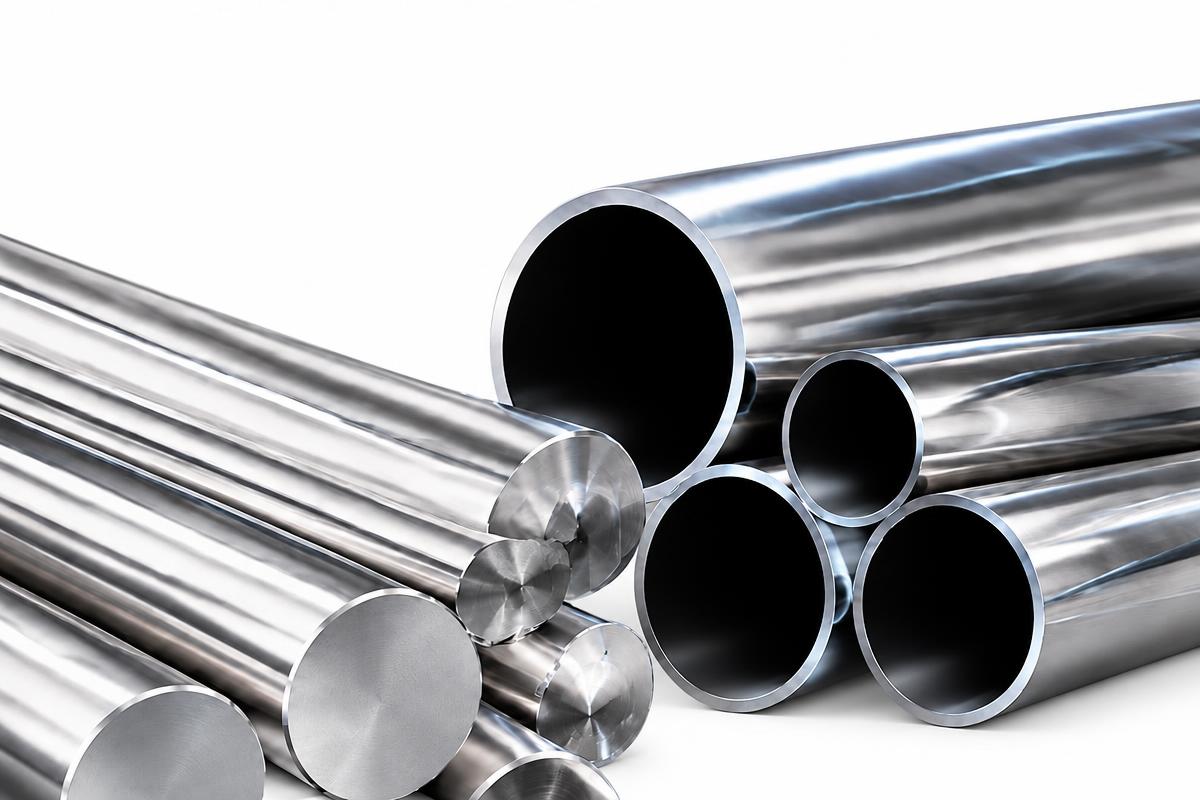
Corrosion alloys are not selected by strength but by whether the passive film survives a specific medium. Three axes decide: oxidizing vs reducing character, chloride concentration, and temperature.
Reducing media: molybdenum speaks
Hydrochloric acid and mid-concentration sulfuric acid defeat a chromium passive film — molybdenum is what holds. Hastelloy B-2 (N10665) with the highest Mo is the classic HCl choice; B-3 improves thermal stability and formability.
Oxidizing media: chromium speaks
Wet chlorine, Fe³⁺-bearing solutions and wet-process phosphoric acid put chromium in charge. C276 (N10276) is the generalist covering both sides; C22 (N06022) with higher Cr resists pitting and crevice corrosion better; 686 (N06686) is more stable in strongly oxidizing, high-chloride combinations.
Chloride and crevices: not just uniform corrosion
In chloride service the killers are pitting and crevice corrosion — gasket faces and weld roots go first. Raising Mo+W and Cr helps, but design changes (avoiding crevices, maintaining flow) often beat a more expensive grade.
A practical order
List the medium (species, concentration, temperature, pH, oxygen), set the oxidizing/reducing character, filter by Cr/Mo balance, then check crevice and stress-corrosion risk. For mixed acids or contaminated media, validate by immersion or electrochemical testing — paper selection narrows the range but cannot replace testing.
This article is a general technical note on materials and processing; cited standards are public standard numbers. Specific grades, sizes and acceptance items are subject to the technical agreement confirmed by both parties.