
Technical Notes/Heating Materials2026-11-04
Choosing Heating Alloys: Cr20Ni80, Cr30Ni70 and the Iron-Chromium-Aluminum Trade-off
Two coils both labeled "2080" can differ 2× in life between furnaces. Resistivity, oxidation, embrittlement and atmosphere compatibility decide between NiCr and FeCrAl.
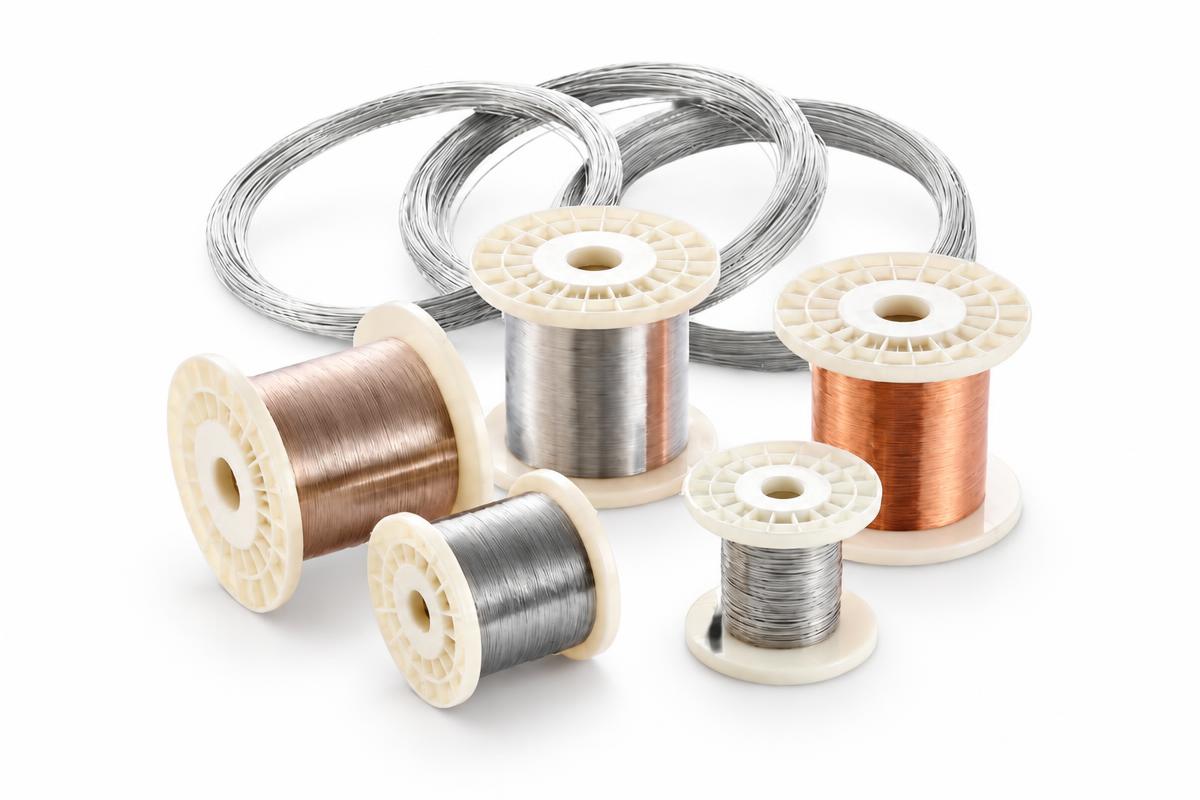
Four properties decide a heating alloy: resistivity, temperature coefficient, oxidation resistance (which sets life), and hot strength/embrittlement (which sets formability). NiCr and FeCrAl trade these differently.
NiCr: formability and stability first
Cr20Ni80 (2080, Nichrome 80) is the most universal nickel-chromium heating alloy — stable resistivity, good hot plasticity, weldable and coilable, suited to spring-shaped and profiled elements. Cr30Ni70 offers higher resistivity and better oxidation resistance for higher temperatures or longer life, at higher cost.
FeCrAl: higher temperature, lower cost — but brittle
Iron-chromium-aluminum grades (e.g. 0Cr27Al7Mo2) reach higher element temperatures and cost less without nickel. The drawback is grain coarsening after hot service, which makes them brittle and hard to re-form, plus sharply shorter life in sulfur- or carbon-bearing atmospheres. They suit elements that are formed once and never re-bent.
Life depends on atmosphere, not just grade
The same 2080 coil serves for years in dry air but fails quickly in sulfur- or halogen-bearing atmospheres. Carburizing atmospheres form carbides on NiCr surfaces and cause brittle failure. Specifying furnace atmosphere, cycling frequency and contact with refractories is more useful than quoting temperature alone.
Wire diameter and surface load
At the same power, thinner wire means higher surface load and shorter life. Engineering practice back-calculates wire diameter from surface load (W/cm²) rather than fixing diameter first. For fine sizes (from 0.05 mm), confirm drawing and annealing can hold resistivity uniformity.
This article is a general technical note on materials and processing; cited standards are public standard numbers. Specific grades, sizes and acceptance items are subject to the technical agreement confirmed by both parties.