
Technical Notes/Forging2026-10-12
Forging Ratio and Homogeneity: The Overlooked Item in Large Bar
Two 250 mm GH4169 bars with different forging ratios differ by a full ultrasonic and macro grade. When buying large bar, ask for the forging ratio first.
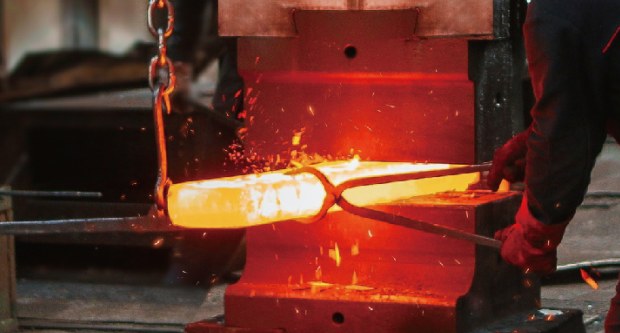
For large bar (60–300 mm) the core issue is not whether it can be made but whether the core structure is homogeneous. Segregation and porosity from the ingot are only broken and welded by sufficient deformation.
What forging ratio means
Forging ratio is the cross-section reduction ratio. It reflects deformation and directly relates to how much cast structure is broken up. For segregation-sensitive grades like 718, insufficient ratio leaves visible macro segregation and ultrasonic noise.
Why large sections are harder
The bigger the section, the less deformation penetrates to the core — surface deforms more, center less, producing "cooked outside, raw inside" structures. Production counters this with multiple heats, orientation changes (upset-draw combinations) and appropriate anvil design.
Three things to confirm when buying
One, forging ratio and method (open die / closed die, orientation changes). Two, macro- and micro-inspection sampling positions (top/mid/tail, surface/core). Three, ultrasonic acceptance class. "Forged condition" alone carries too little information.
Relation to downstream steps
As-forged structure directly determines post-heat-treatment grain size and property uniformity. For rotating or large load-bearing sections, fix forging ratio, ultrasonic class and grain size together in the technical agreement — discovering core issues after delivery is too late.
This article is a general technical note on materials and processing; cited standards are public standard numbers. Specific grades, sizes and acceptance items are subject to the technical agreement confirmed by both parties.