
Technical Notes/Precision Alloys2026-10-24
4J29 Kovar: Why It Seals to Glass at All
Matching expansion is only the entry condition. What actually decides hermeticity is oxide-layer control, the sealing temperature curve and post-sealing plating — leaks almost always trace to these three steps.
4J29 (Kovar, ASTM F15) is the standard controlled-expansion alloy for electron-tube and semiconductor packaging. Its value is not strength but a mean expansion coefficient close to hard glasses (e.g. DM-305) from 20 to 450 °C, enabling rigid metal-to-glass seals without cracking.
Matching is the prerequisite, not the seal
Matched expansion prevents cracking on cooldown but does not guarantee hermeticity. The actual seal comes from chemical bonding between the metal surface and glass, which requires an oxide layer (mixed FeO/Fe₃O₄) of the right thickness and adhesion.
Oxidation is the critical step
Under-oxidation leaves glass not wetting the metal; over-oxidation gives a loose layer that bubbles later. Pre-oxidation is normally done in wet hydrogen or a controlled-dewpoint atmosphere — the temperature/time window is narrow and follows empirical curves more than calculations.
Sealing curve and post-processing
The sealing cycle must balance glass viscosity against metal transformation; sealed parts are annealed to release stress. If plating follows, confirm the oxide is fully removed without over-etching the base — otherwise plating blisters and hermeticity regresses.
Supply forms and acceptance
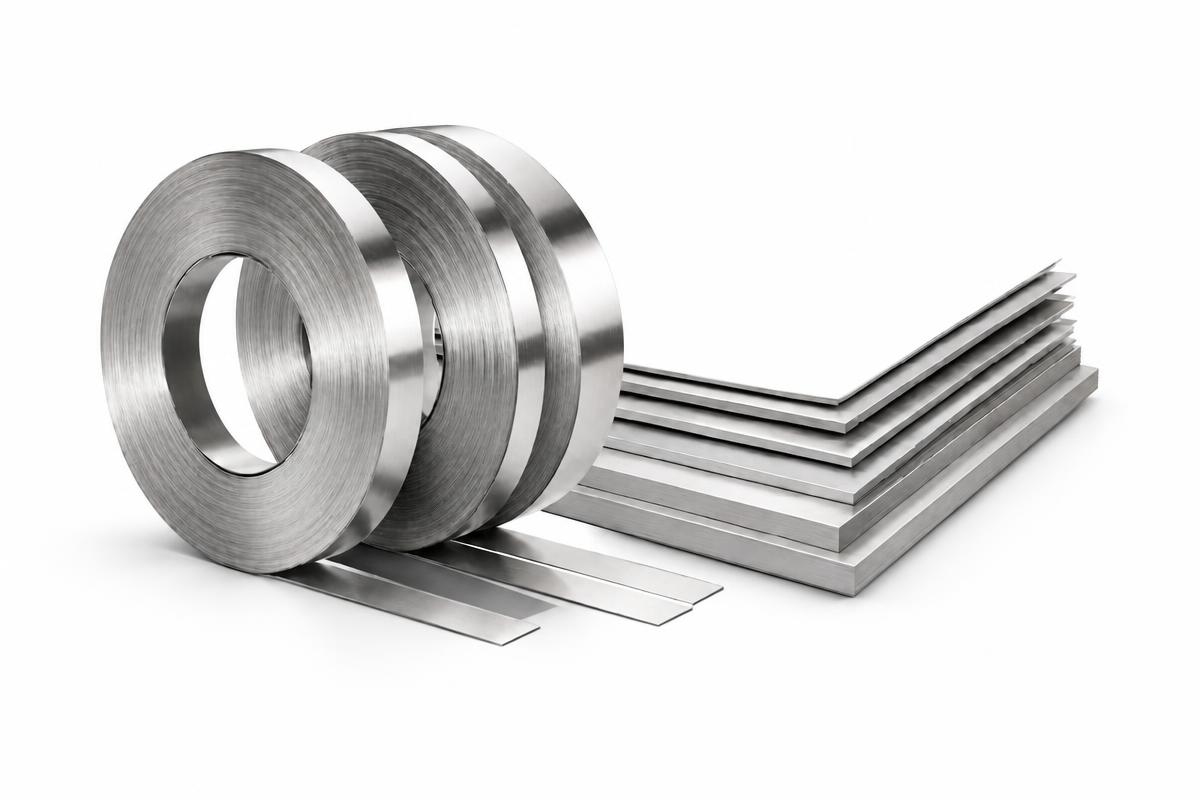
Common forms are cold-rolled strip, bar and wire; deep-drawn parts demand tight thickness tolerance and flatness. Acceptance should fix expansion coefficient, helium leak rate and surface quality — composition alone is not enough.
This article is a general technical note on materials and processing; cited standards are public standard numbers. Specific grades, sizes and acceptance items are subject to the technical agreement confirmed by both parties.